
 630-393-3111
4200 Cantera Drive, Suite 200 | Warrenville, IL 60555

-

- Home
- Firm Overview
- Attorneys
- Practice Areas
- Divorce
- Allocation of Parental Responsibility and Decision Making (Child Custody)
- Parenting Time / Visitation
- Spousal Maintenance / Alimony
- Modifications to Child Support and Spousal Maintenance
- Modifications to Allocation of Parental Responsibility, Child Custody and Parenting Time
- Parent & Child Relocation / Removal
- Child Support
- Enforcement of Judgments
- Finances and Divorce
- Businesses and Divorce
- Mediation
- Family Law
- Divorce
- Appeals
- Testimonials
- Blog
- Contact
8 Red Flags of a High-Conflict Divorce
 Conflict happens in most divorces. Couples who agree on many issues can still argue about money, parenting, or emotions tied to the end of a marriage. This kind of disagreement is normal. However, some divorces involve conflict that goes far beyond what most people expect, and spotting the warning signs early can help limit damage.
As of 2025, divorces in Illinois are governed by the Illinois Marriage and Dissolution of Marriage Act. This law encourages cooperation when possible. It also gives courts tools to step in when one spouse refuses to follow the rules. Consider some possible signs of a high-conflict divorce, and contact our Naperville, IL divorce lawyer to learn how we can help.
What Is a High-Conflict Divorce in Illinois?
A high-conflict divorce is not defined by one argument or one bad interaction. Instead, it usually involves repeated behavior that causes ongoing problems throughout the case. One spouse may delay the process, ignore court rules, or refuse to compromise.
Illinois courts expect both spouses to share financial information, follow court orders, and act in the best interests of any children involved. A high-conflict spouse often ignores these expectations. This drags a divorce out and makes it more stressful.
Some high-conflict spouses are openly hostile. Others appear calm but create problems behind the scenes. Either way, it can have a major impact on the divorce process.
When Your Spouse Sends Threats or Tries to Intimidate You During Divorce
One common red flag is threatening behavior. This may include threats about taking the children, cutting off money, or dragging the case out in court. These threats often come through text messages or emails, and they are usually meant to scare the other spouse into giving in. Upsetting as they may be, these messages can also become evidence if court involvement is needed.
When Divorce Communication Becomes Harassment or Bullying
Communication is necessary during divorce, especially when children are involved. However, your conversations should stay respectful and focused on practical matters.
Some spouses send repeated texts, use name-calling, or demand instant replies. Others send long messages meant to provoke anger. Messages that are insulting, excessive, or aggressive should raise a red flag.
When Your Spouse Refuses to Share Financial Information in an Illinois Divorce
Illinois law requires both spouses to be open about finances during divorce. This includes sharing information about income, bank accounts, debts, and other assets. Courts rely on this information to make fair decisions about support and property. When a spouse refuses to share financial information, it can delay the case and increase costs. It could also raise concerns about hidden income or assets.
Under 750 ILCS 5/501, Illinois courts can issue temporary orders while a divorce is pending. These orders often require both spouses to exchange financial documents and maintain the status quo.
When Parenting Time Is Used as a Weapon in an Illinois Divorce
Using children to gain leverage is one of the most serious red flags in a high-conflict divorce. This can include refusing parenting exchanges, changing schedules without agreement, or blocking communication between the child and the other parent.
According to 750 ILCS 5/602.7, courts decide parenting time based on the best interests of the child. When one parent repeatedly disrupts parenting time, it can harm the child’s emotional well-being. Sometimes, courts address this by enforcing existing orders or adjusting parenting arrangements to protect the child.
When Your Spouse Cuts Off Access to Money Without Permission
It is a huge red flag if your spouse suddenly cuts off access to joint bank accounts or stops paying shared bills. These actions are often less about money and more about control. They also tend to escalate the situation, increasing the likelihood of emergency court filings and added conflict.
When Every Small Disagreement Turns Into a Major Divorce Conflict
Disagreements are expected during divorce. Constant escalation is not. A high-conflict spouse often turns small issues into major problems. Simple matters like scheduling a pickup time or sharing a document become long arguments. This pattern makes progress difficult.
When Your Spouse Ignores Court Orders or Misses Deadlines in Illinois
Court orders are not optional. They are legally binding instructions that both spouses must follow during a divorce. These orders may address issues like parenting time, child support, temporary financial support, or access to marital property. When a spouse ignores court orders, it can delay the case.
Courts have several ways to enforce orders. They might order compliance, impose fines, award make-up parenting time, or hold a spouse in contempt of court. Repeated violations, especially those involving children or finances, are taken seriously and often lead judges to set stricter rules to keep the case moving forward.
When Your Spouse Tries to Turn the Children Against You
Parental alienation is a serious red flag in a divorce. It happens when one parent repeatedly tries to damage the child’s relationship with the other parent. This could include making negative comments, sharing adult details about the divorce, or encouraging fear or resentment.
Children should not be placed in the middle of adult disputes, and Illinois courts pay close attention to this behavior. Judges look for ongoing patterns rather than isolated mistakes. When these actions continue over time, they often signal a high-conflict divorce that requires careful handling to protect the child’s well-being.
How To Protect Yourself During a High-Conflict Divorce in Illinois
You cannot control your spouse’s actions, but you can control how you respond. Planning ahead and staying consistent can help reduce damage.
Helpful steps include:
-
Keeping messages short, calm, and focused on facts
-
Avoiding emotional replies to hostile messages
-
Saving texts, emails, and other records
-
Following court orders carefully, even if the other spouse does not
-
Setting clear limits on communication
These steps help reduce conflict and create a clear record if court involvement becomes necessary.
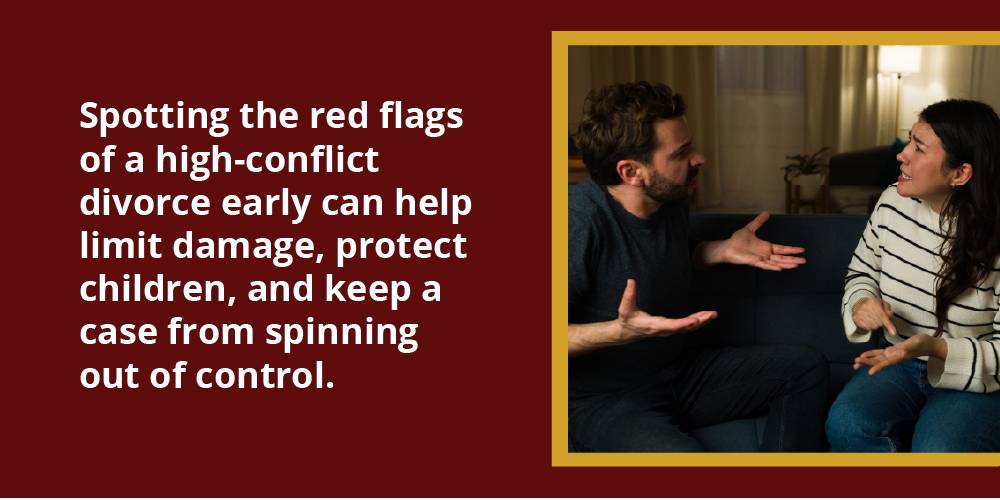
Contact a DuPage County, IL High-Conflict Divorce Attorney
Having a strong Naperville, IL divorce lawyer from Calabrese Associates, P.C. is the best way to counter a high-conflict spouse. Your attorney can handle communication with your spouse so you do not need to interact more often than necessary.
Attorney Michael J. Calabrese currently lectures on family law-related issues and is the former chair of the DuPage County Bar Association Family Law Committee. He will do everything possible to pursue the best outcome possible for your divorce, even when there is a high-conflict spouse involved. Contact us today at 630-393-3111 to schedule a consultation.
 4200 Cantera Drive, Suite 200, Warrenville, IL 60555
 630-393-3111


Contact Our Firm
 The use of the Internet or this form for communication with the firm or any individual member of the firm does not establish an attorney-client relationship. Confidential or time-sensitive information should not be sent through this form.
I have read and understand the Disclaimer and Privacy Policy.

